Extreme Ownership - the foremost principle
Personally, I believe this to be the foremost mindset to cultivate.
Regardless of the variation in situation, environment, background…etc – this will allow you to face it in a proactive and self-empowering manner that returns the greatest degree of learning. Hence, regardless of what you face – you will be able to rapidly adapt in a suitable way.
Simply put
Extreme Ownership is a mindset where one owns themselves, their ability, their environment, the people around them, the outcomes (especially the bad), and everything in-between. ‘Owning’ in the sense of taking responsibility and accountability. ‘Extreme’ in the sense that the scope involved exceeds the norm significantly, and is near absolute.
Initially, I described Extreme Ownership simply as,
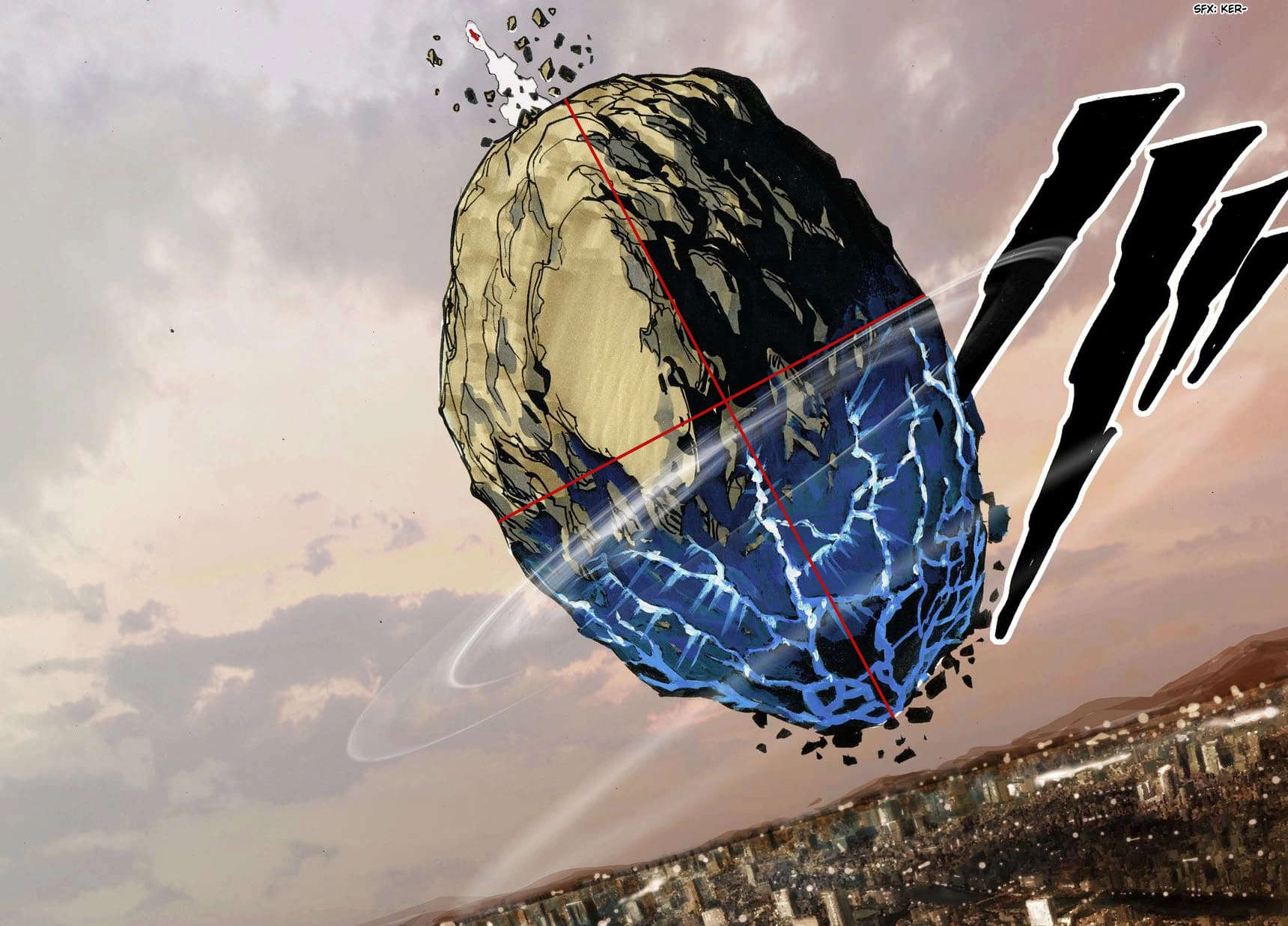
Unless a meteor hits, you can still do something
This implies,
- you can always do SOMETHING to effect your situation and outcomes in a positive way
- unless it’s a catastrophic and truly out-of-control circumstance (like a massive meteor crashing down on your location ☄️)
However, upon writing this article – I realised I’ve deepened my perspective since then, as meteor mitigation ideas snuck into my mind. First, some sort of perimeter monitoring? Maybe pre-emptive nukes at it? Go to the other side of planet? Cancel my group insurance?
Thus, I now have another rephrase of it,
Until the meteor hits, you can still do something
this implies,
- …and even with a disastrous event looming on the horizon
- you can still, always do SOMETHING positive towards it
- especially if you are aware of it
But I like using the original phrasing as it captures the broad spectrum of possibilities rather than focusing on a cataclysmic event – whether it’s the normal boring everyday, a gradual shift or a spark of conflict.
Extreme Ownership Levels
In any circumstance, and even with a looming disastrous event – I truly believe I can do something about it that would make the outcomes lean more positive. I fully own what happens and what I can do about it.
There are a few levels and scopes to this,
Level 1 examples – yourself: Level 1 is uncommon, but not hard to find among high-performers, the ambitious and reliable individual contributors. Owning oneself is a starting point.
- the feature you’re building is not harder than expected, and no one in the team can help:
- is there a more basic implementation that can be built instead?
- are there obscure communities or experts I can find help from online?
- the survey you’re conducting is getting few responses – online and in-person:
- can I make the form more fun? what if I add humour to it? personalise it further?
- could I incentivise people, maybe give out chocolates? try a different location? any gatherings or events that might have more willing targets?
- no one is taking meeting minutes:
- could you do it yourself?
- your day-to-day work is not aligned with what you want to do:
- can you gain exposure to what you want to do? on nights & weekends? on your leave?
- offer to help an adjacent team?
Level 2 examples – others: Level 2 is rarer – I only observe this in leaders who truly empower their team. Not managers, but leaders. Leaders not necessarily the head of a team or the most senior, it could be the junior or even the freshest bright-eyed joiner. Anyone who empowers people around them is a leader in some capacity.
- your teammate(s) suddenly called in sick, the workload pressure increases for the deadline:
- could you takeover a small bit? could you help without compromising your own critical tasks?
- are there any delegation angles you can make?
- can you verify the deadline feasibility and negotiate it if needed?
- your teammate is watching Dota 2 E-sports before finishing their tasks and nearing the deadline:
- can you Make the team more fun than Dota 2?
- could you offer to listen to them and understand beyond what you see?
- you get the vibe your colleague (who you don’t speak to much) is struggling:
- R U OK?
- you notice an introverted teammate isn’t talking much on calls/chat:
- can you make an effort to ask for their opinion a couple of times each meeting?
- make a few jokes together?
- despite significant work done together, there is no feedback mechanism in play:
- make it happen yourself, Feedback System - BARDARPAR
Level 3 – when it rains: the times of struggle and hardship where everything isn’t easy
-
Level 1 is uncommon, Level 2 is rare – both together is rarer
-
However, it’s still relatively doable in times of sunshine and the going is good
- when the startup/company is doing well, you’re doing interesting/high-visibility work, with great user feedback, growing financial compensation, and the team has a great culture already.
-
When it rains, Extreme Ownership is much much harder to do. As costs to own become steeper – both personal and in opportunity. And yet, the potential rewards are even less visible in the valley of despair and local minimum. With scarce resources available in a person and team.
-
Some examples I’ve observed:
- In the army: the masks people wear come off especially in an out-field (operate in jungle) mission. No one can keep their mask on for an extended period of time under strenuous situations – their inner character shows. The quiet person snaps. The friendly dude is selfish. The commander vocalises anger more often and encourages less. The men do less and complain more.
- In hackathons: people’s masks shows cracks in moments. Moments when there are conflicts of opinion, when the deadline approaches after an all-nighter, and especially when there are differences in expectations.
- In workplaces: people are generally proficient at keeping their mask on – especially the larger the company. I do believe it can lead to a degradation of one’s true self and potential – as the mask you wear slowly influences your inner-self, habits and beliefs. Not to mention the cognitive dissonance borne when you’re essentially lying to yourself. i.e. you don’t or aren’t able to bring your full-self to work
-
When it rains, Extreme Ownership becomes costly. This makes the temptation to reduce costs by cutting back Level 2 and Level 1. From Extreme Ownership lowered to Average Ownership. This is a normal human response, normal in the sense it’s ok and understandable. However, to produce exceptional outcomes – normal is not good enough.
-
I’d encourage you to reconsider the following nuances in times of rain.
Nuances to Extreme Ownership: as it’s an extreme mindset and way of thinking, there must be nuance in why, how, and what. Consider,
- framing: Why am I applying Extreme Ownership in the first place here?
- costs: How are the costs arising? What is the opportunity cost of applying and not applying Extreme Ownership?
- alignment: is it worth it? Are the outcomes still what’s truly important to me?
Additionally,
- Always remember that Extreme Ownership is an application on oneself, and never on others. Never expect others to hold your standard of ownership
always have this mindset?
Two questions that must be answered.
- can it be done? Is it possible to apply Extreme Ownership for this context?
- by its definition, it’s always possible to apply it and own it some form
- should it be done?
- the reason of Extreme Ownership is the empowerment of self, to remove excuses, and proactively consolidate the locus of control internally – which focuses you on what you can do to make your situation and outcomes better
- hence, for that reason – its always something that should be done
- the distinction is not to apply Extreme Ownership blindly, but with its nuances considered
While it can be tempting to stop applying Extreme Ownership sometimes, it usually just means you need to apply it with a different framing and alignment and change the cost. Or simply remember – once the rain stops, the sun will come.
As complicated as it can get. Fundamentally and simplest, "unless a meteor hits, you can still do something" and you'll be alright 😉
and even then, sometimes you can still do something ✨
Some formative moments in my life
- Early in childhood, I remember my older cousin Lois apologising to the adults and owning the situation when the rest of us younger cousins were getting really noisy playing together. The way she defused the situation, owned it despite not being one of the noisy ones, and stepped up – made a big impression on me.
- Growing up, going to Youth group: I had good male role models (Sam and Cale), in how they took responsibility with empathy and firmness when needed – over easier paths. In how they sacrificed their time and energy.
- Many in the army. From the start of my commander scolding me, when I owned my assigned responsibility to take charge of 40 peers in Basic Training. When I saw my platoon in knock-down (push-up) position with packs on waiting for me. When new officers joined my unit.
- In a hackathon with Jasmine, when she said “…just as we can take responsibility and celebrate when things go well from working with someone we invited – inviting someone also means we must take responsibility when things don’t go well”. What she said saved me from making a narrow decision. It changed how I react to poorer outcomes in teams I form.