I spent $15.63 on a cup of froyo, and only ate half
What?
A few days later, my friend spent ~$14 on a cup, and also only ate half.
My Key Takeaway
Fool me once, shame on you. Fool two seperate people twice, and you are selling sugar. Fool each person in an entire country, and you managed to scale selling sugar.
Yochi – a froyo (frozen yoghurt) dessert chain – has made froyo cool again
With 3 main drivers: Product Experience, Product Design, and GTM
It really strikes me how concepts in Product and Sales can be applied to both physical and software products. And how revamps can spark a new adoption curve.
My brain was recently kicked into product analysis-mode from observing the craze around “Yochi” in Australia. Here are my thoughts.
Once in blue moon Froyo, and then you hear it everywhere
Recently, a friend recommend I grab froyo at Yochi after our lunch. I never really been into froyo or bubble tea (except that one sugar-filled week after army training in Taiwan). So initially, I said I’ll pass. But the storefront looked so inviting – I went in to ‘take a look’.
Next thing I knew, I was filling that LARGE-only cup with chocolate and coconut froyo, I spammed the passion fruit and nut toppings. I slabbed on chunks of chocolate chip cookies and brownie. I smashed a dollop of pistachio sauce.
“And that’ll be $15.63 please”
I was taken-aback, it didn’t look that big or feel that heavy to justify that price. Unfortunately, I wasn’t strong enough – and could only eat half of it 😔
A few days later, I was treating some friends and they opted for froyo at Yochi after dinner. I found it weird how mentions of froyo suddenly spiked – it was definitely a demand spike, and my brain kicked into product analysis-mode. What? How? Why? and backwards to verify.
Food trends
In Australia, I grew up and remember the Boost Juice craze, the bubble-tea (boba) craze, the froyo craze, and the bingsu craze. Commonly, they all came and left. A rising jump in demand, with supply growing to meet it – followed by a subsequent demand drop-off and supply deflation (stores closing). Steady state market equilibrium is achieved (I loved my microecons in Uni).
It can be observed that food trends often come from importing what’s popular in a foreign country and adapting it to suit the preference differences in one’s country. A cross-cultural exchange and an example of globalisation. And accordingly, large profits can be made.
Once the novelty has worn-off, the food trend declines – and becomes normalised. Bubble-tea becomes another drink option…etc. All these new choices become another letter in the alphabet.
What’s interesting is when another cycle occurs. How?
Like this froyo craze reemergence. Previously, I remembered a bunch of different froyo stores and chains – and observed many fading out of business. Like weeds after the rain.
Yet, we can observe a reemergence of demand now, and interestingly – the majority of demand has been captured by Yochi.
analogy to the fashion industry
Many industries are cyclical in some form or aspect. The fashion industry is quite an observable one. Trends change rapidly and disseminate from hubs/influencers to the general public. I asked a friend about hipster/80’s fashion reemergence once, she commented that old styles and looks can become popular again when they fade out to the point it’s ‘novel’ and then influencers bring them back into the spotlight again.
Yochi - a successful example of Product, GTM and trend reactivation
What’s happening in Australia: - long queues stretching outside Yochi stores when another froyo store (like Tutti Fruitti) across the road is near dead-empty - my friends suggest Yochi as the place to grab dessert or hang - late nights, still popular
Here’s my breakdown
Let’s start by following the general user flow.
An unsuspecting member of public is walking on the street after getting a meal, they stop when a long line of people are queuing outside a Yochi store. They look at the store, it looks like a modern cool and cosy store – rare in their experience. They make a mental note to check it out next time. Next time, the queue isn’t running out the door, they enter and go “Why not?” Boom they go crazy on the froyo and toppings, get a pleasant surprise at the counter at the price. Sign-up for the rewards program since they are spending so much. Get ad-targeted for future. Sit down and eat their froyo – it’s nice. The seats are nice. The music is nice. The vibes are nice.
How could most people resist that? Who would want to go to a Baskin Robbins (with the laundromat lights, the stains, and pink decor)? Why stand around or sit in tiny tables at a bubble-tea hole-in-wall?
Here’s my more specific and basic breakdown, roughly following a user’s journey:
1. GTM
- they ran a bunch of free froyo campaigns and blasted social media well
- which resulted in long queues that was the best social proof and live billboard on the street
2. Product Experience
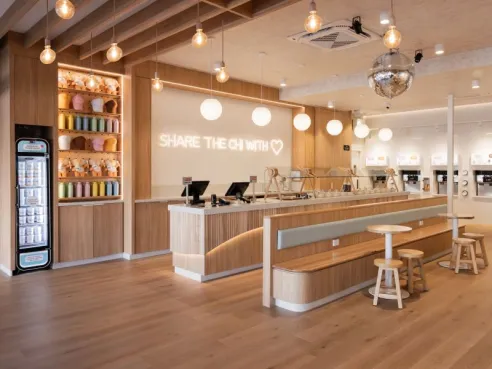
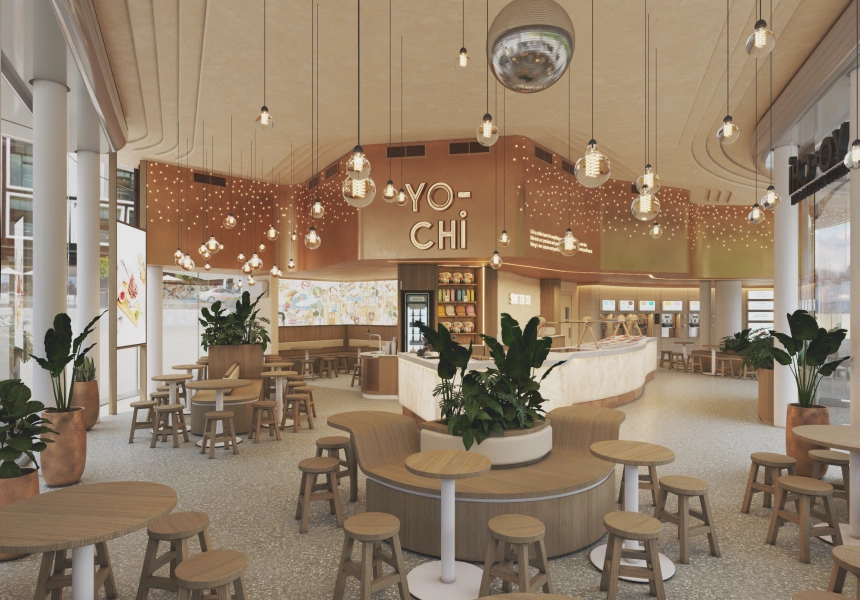
Warm wood, cosy lights, green plants. Minimal sharp angles.
This is where you could bring a date.
Great interior design: it’s modern, aesthetically pleasing, chill
- modern trendy music – not too loud
- warm cosy lights
- fills the lacking study-cafe atmosphere in Australia
- compared to baskin robins? to san churro? to hole-in-wall bubble tea outlets?
A user buys more than the frozen yoghurt – they are buying the right to sit down and be here. They are buying an experience.
- it’s cool
- this isn’t the only example in Australia, but they have managed to nail accessibility as well providing sufficient space – space to appreciate the space. While other examples of modern interior-designs in F&B that come to mind, often go for limited exclusivity.
3. Product Design: tangible and differentiated
tl;dr the froyo is better, but not by much. However, it’s really well packaged and has some unique toppings!
Packaging
Firstly, packaging – it matters. It’s like the product before the product, the egg before the chicken.
I got reminded of when I was in San Francisco, and the Korean takeout I got from a kitchen-only hole-in-the-wall in an alleyway – had startup-level branding and packaging.
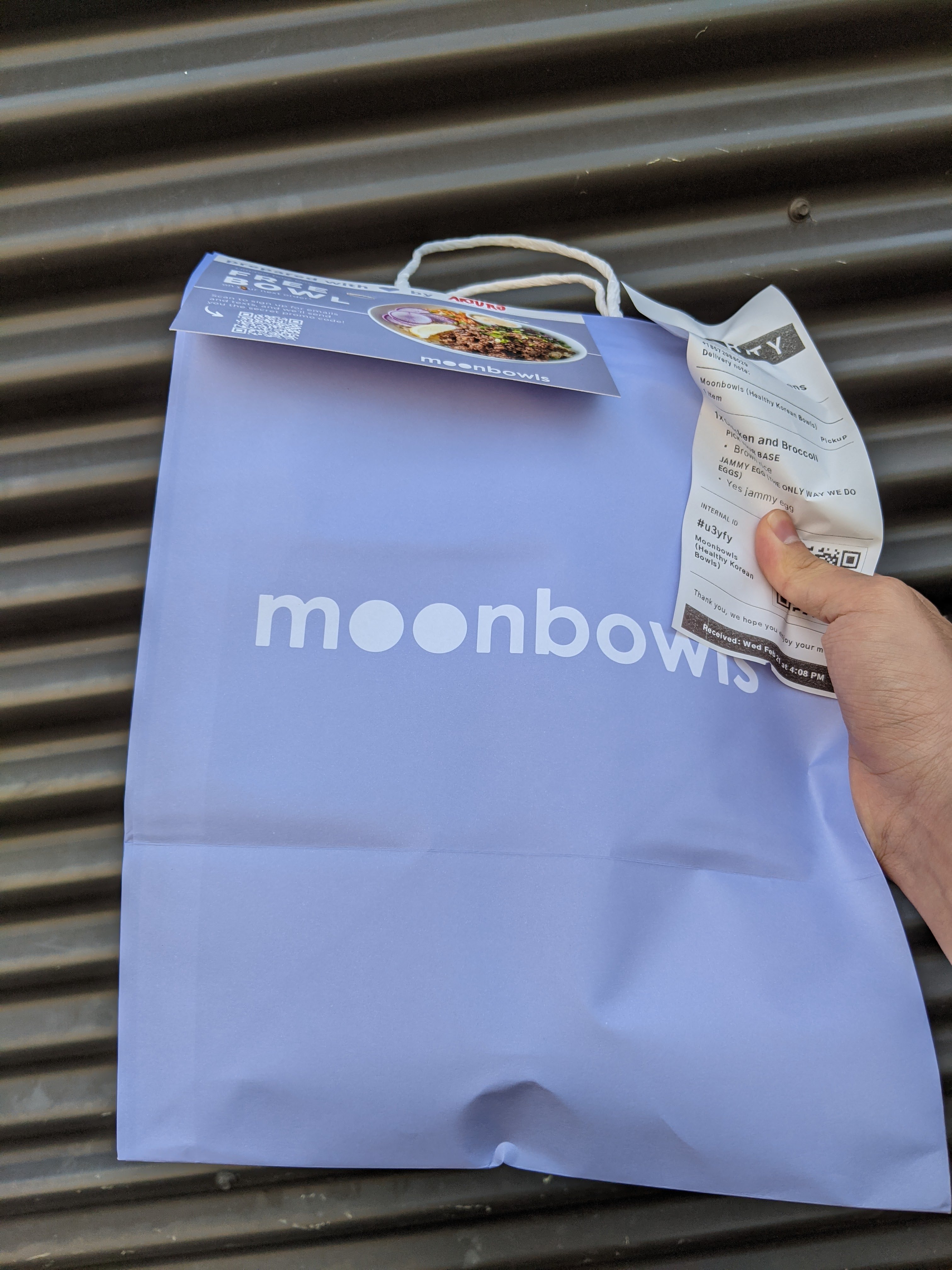
I had to check they put food inside and not a wearable IoT device.
Now, you walk into Yochi and grab an empty cup.
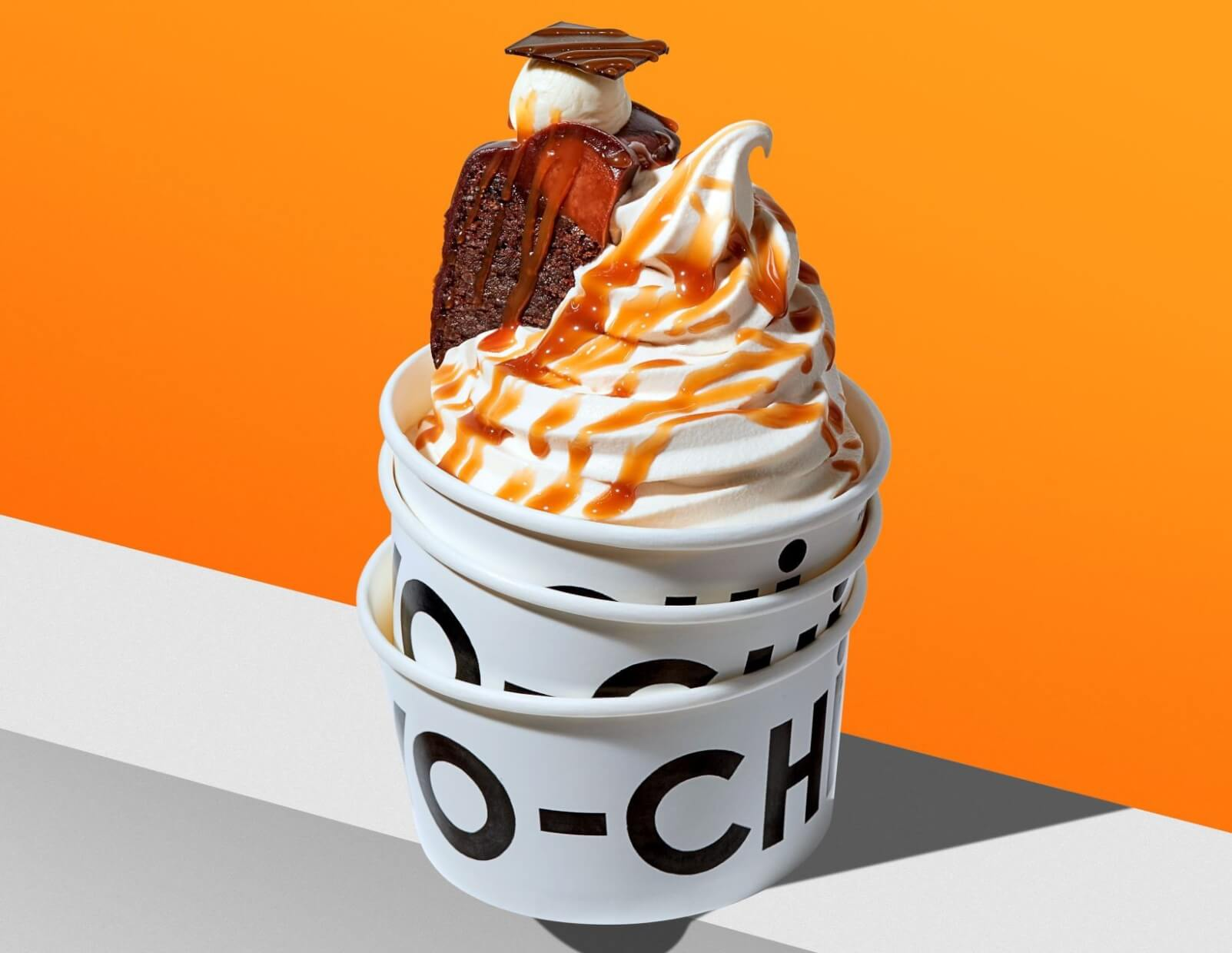
a simple black on white. Strong contrast, nothing daring – but nothing risked. Appeals to most.
Compared to Tutti Fruitt (another froyo chain)
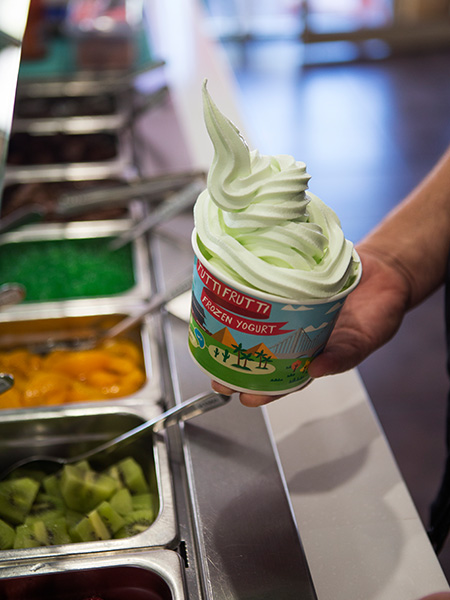
a cartoonish cup ready to fill with toppings in factory-made steel containers
Or some variation,
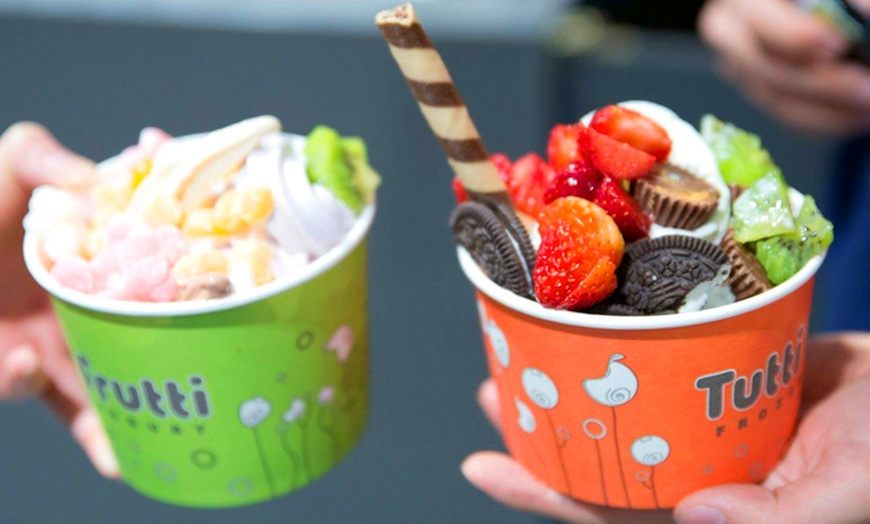
colourful and playful, but risky. Doesn’t appeal as ‘cool’ broadly.
Ask yourself, if you had to give a cup to your date – which would it be? Or which cup would you pack your lunch in to work?
If Yochi cups look like an Apple Macbook, then Tutti Fruitti cups look like that toy frog-shaped calculator you had as a kid
Tangible Product
- ingredient quality: the main component – froyo – is marginally better enough for most people to tell, while the general toppings are typical.
- according to Reddit, the froyo is better that other stores 🤷🏻♂️
- for most toppings, I doubt most people could tell the difference between A and B quality for raisins and nuts.
- unique-ness/topping differentiation:
- besides the basic ones
- they got some interesting ones (Boysenberry?), and more importantly – it looks good
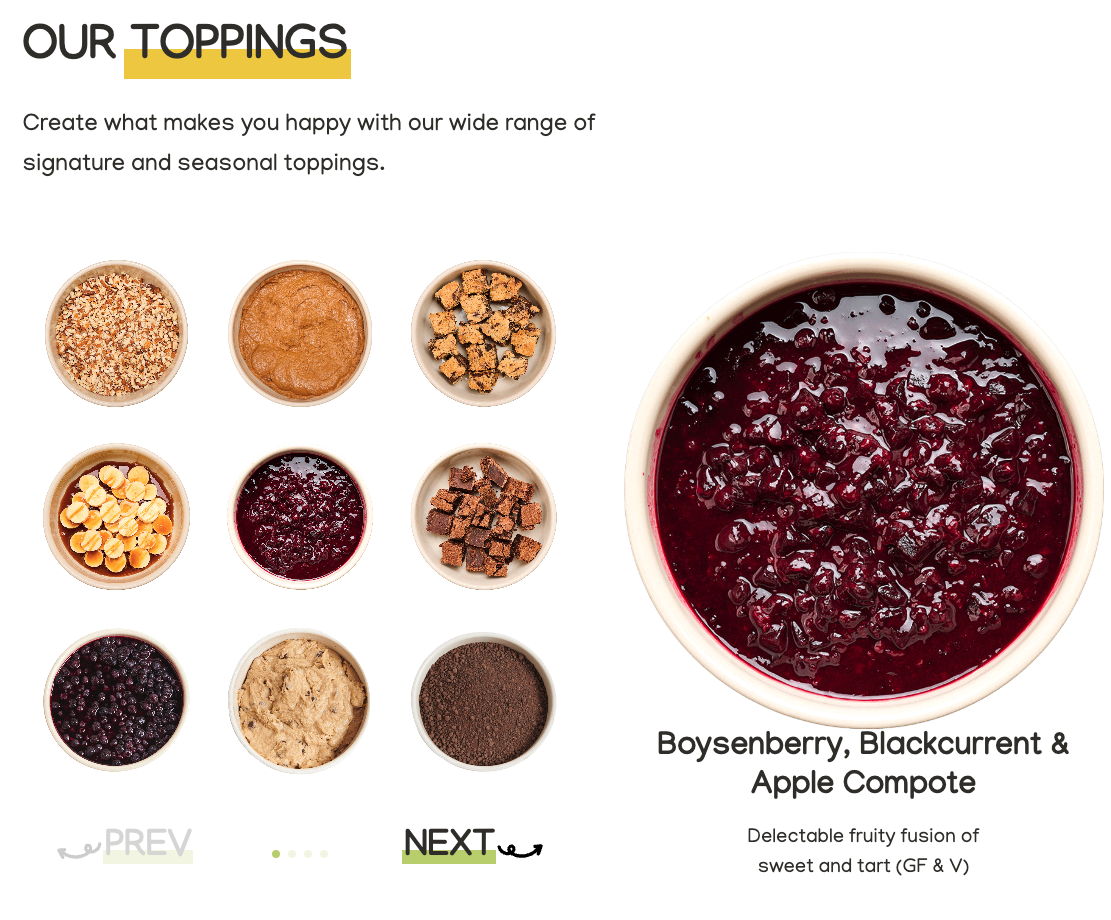
Look at this “Cheesecake Cookie Pie made with Biscoff” topping
- Why is that cooked pile of sugar in an aesthetically pleasing porcelain bowl?
- Why does that bowl remind you of the bowl at your grandma’s home?
- Why are these toppings not squeezed into silo’s of rectangular metal containers with blurry translucent coverings?
- Does the froyo store down the street have “Cheesecake Cookie Pie made with Biscoff”?
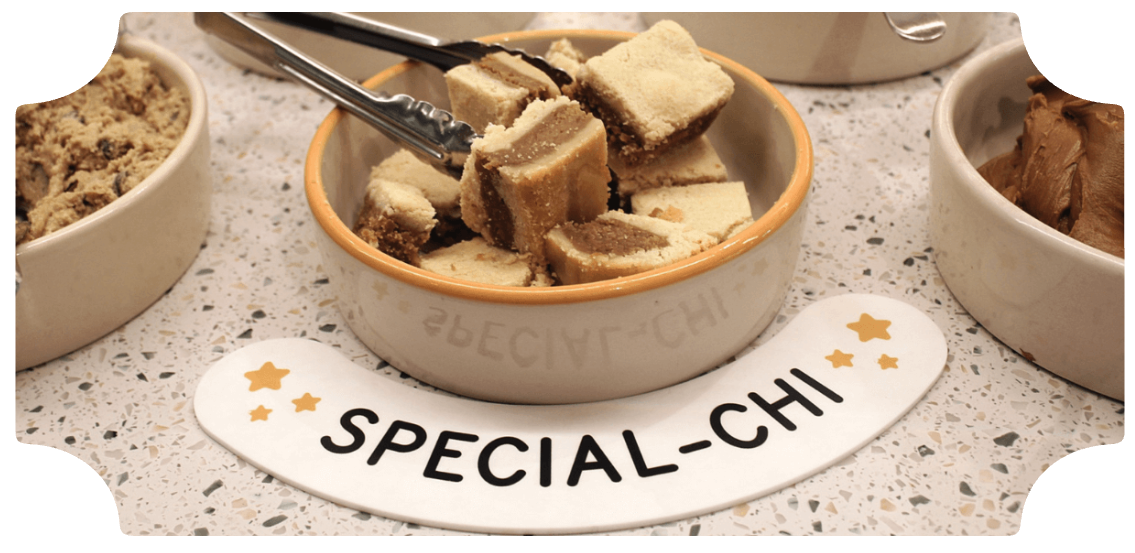
Would you rather slightly better froyo or normal froyo? Do you want to scoop your toppings from a bunch of squeezed steel containers (with jam spilling into the chocolate chips) or from your grandma's bowls?
Intangible Product
Good to mention. The intangible product – in this case: Consistency, is the biggest one I reckon.
At any Yochi branch/location, a user can expect and find a similar experience.
- Do people go to McDonalds for taste? for price? for quality?
- perhaps, but you can find better taste and quality elsewhere for comparable/cheaper prices.
- McDonalds (or maccas in Australia) is not cheap, it costs as much as a normal meal.
- People go to McDonalds for consistency and convenience (that their economy of scale allows)
- A user does not need to trouble themselves to look-up and pick a desert place among many scattered on Google Maps, they just need to ‘default’ to Yochi because it would be a consistent bet rather than a risky venture.
- A user can comfortable suggest Yochi to their friends, who know it too.
This might be ‘brand’ but I think “Consistency” captures it better.
Revenue Drivers - how to sell more sugar by weight
What can be priced like Salmon, but is way cheaper to produce?
Answer: Froyo
A good metric in food and beverage is to consider the $ per kilogram. That should give a good benchmark on the perceived value behind an item, and also inform you how much of it can be attributed to nutritional value.
At Coles (a supermarket chain in Australia), you can buy:
- Oranges at $5 to 10/kg
- Fresh Tasmanian Salmon (with skin-on) at $38/kg
- Premium Häagen-Dazs icecream on special at ~$18/kg
At Yochi, you buy by weight:
- at ~$38/kg
Now normally, food higher up the food-chain costs more, roughly 10x from plants to meat phase. So how can essentially sugar/diary, cost as much as Salmon meat?
Off-topic Many places and brands – in this case, Yochi – has been able to convert sugar into dollars. A valid business model, but sad in some ways. Imagine if all the brainpower and innovation behind making sugar more profitable, went into making healthy foods taste better, more accessible and cheaper at scale.
Where is the vegetable bar?
When I was in the US, I got the impression that
the rich people, are often the healthy people
in that, when I tried to eat healthy in the US – it was difficult and inconvenient without spending a lot of money.
Back to topic, I’m generalising a bit. Obviously there can be non-sugar based components in Yochi froyo like nuts and the diary-based froyo – but sugar is a big portion of the ingredients, and even in the froyo.
Essentially,
- sugar and other ingredients for froyo is cheap to produce – much more than Salmon
- a froyo business can demand a higher price margin upon it by providing the aforementioned value breakdown in previous section
- the key is to do it in a way to be able to sell a lot of it, because people aren’t going to just buy sugar
- specifically, what ways can be used to increase the weight of the froyo?
Well, its DIY – so the user controls how much they want right?
- this DIY self-serve method of froyo, reminds me of “Buy Now, Pay Later”
- imagine how much less you would get if you saw the price of your froyo change in real-time
- Humans over-estimate their appetite – esp. on first-go.
- I predict a spike and slope in revenue for each individual new consumer
- The Yochi bowl is huge – it’s like default large+ size
- there is no small size, only this one LARGE size
- so when its DIY, what are you naturally inclined to do?
- you fill the space!
- It’s oddly satisfying to make a perfectly shaped poop-looking pile of froyo in a circular container. Imagine if it was a rectangular or square container, would that be as satisfying or successful?
- The froyo machine has a last dollop
- you are pressing down the lever – froyo is pouring into your large cup
- you had enough, you release the lever
- and the machine unleashes that final dollop the length of your fingers
- +50g maybe? that can be an extra +couple dollars you did not want or need
- you’re going to have to practice to stop that machine in time
- Thankfully, you can get a lot of practice with that loyalty program they have – go read some other article on how loyalty programs and point systems work
Feedback Loop
If you read my other writings, you know I love feedback loops.
For Yochi and froyo stores, the weight system and a loyalty program are great channels for data collection and analytics.
Easy to test a new topping, change the order of froyo flavours, test exclusivity, and even map consumer patterns. Plus, it helps forecast the logistics!
Leveraging Cyclical demand in Software Products
Between physical products, like this Yochi example, and software products – we can draw comparisons like:
- a nicer looking store to a nice looking landing page
- a pleasant product experience to a great onboarding experience and UX
- toppings in homely bowls to an app’s UI
- a strong GTM and freebies to listing recognisable brands using your SaaS B2B product and giving free trials/tiers
Simply ask: “What would this look like in software?” for all of the above points I conveyed.
I believe
There must be outdated/past-cycle suited software products that are ready/soon-to-be ready for the next cycle and to be brought to meet current level of user expectations.
Perhaps the new seeds of demand are there. Perhaps the new generation is about to commence a new round of usecases. Perhaps the incumbent hasn’t stayed on-top of things. (e.g. Adobe Photoshop and what Canva answered)
This isn’t a groundbreaking thought. We generally acknowledge that legacy incumbents are in every industry. However, I’m hoping this consumer/froyo example helps anchor it further for you.
a well-timed train-of-thought
I’m about to join a startup, and one of my thoughts when I first saw their website was a big “hmm”. It felt off. It wouldn’t win the UIUX award in my opinion. It felt missing elements seen in some more polished websites in other startups.
However, some things could be inferred:
- it didn’t really need to: the industry and decision makers they were targeting were probably more used to less friendly UIUX interfaces. They weren’t targeting a ‘picky’ crowd – e.g. developers (i.e. Stripe’s documentation/website is 👌)
- B2B and large deal size in relation to need: great UIUX in the landing really demonstrates its necessity for B2C, for B2B – it’s less damaging, as your ICP should have a high-level of need (for the premium they are willing pay) that they are willing to ignore the imperfections in your landing page/site.
- however, plenty of low-hanging fruit: marginal improvements still work regardless of B2C or B2B – you essentially shift the adoption curve in your favour.
I’m not going to drop names or paste the startup’s site here.
But some quick-thoughts on improvements – i.e. how to Yochi-level-up the front
- improve navigation:
- all info is on the home page, links at bottom jump to sections of home page
- consider
- a homebar/hamburger nav menu
- creating seperate pages (and deepen the context) for each link rather than treating it like a table of contents
- increase demo visibility
- there is a downsized and detail-lowered screenshot of the product (both desktop/mobile app)
- consider
- a demo GIF at the top (make use of the blank space already there)
- upsize the demo and increase relevancy: geolocate the prospective customer’s country and change the demo displayed with reference/social proof of one of their real-world customers matching that country
- however, I do wonder if the demo is intentionally not explicitly conveyed and instead they prefer to “book a demo” to tailor the demo experience for each user
- auto-format to auto-update the year below 😅 (the “all rights reserved thingy”) – looks more professional